Portfolio Dog & cat

GSD Dexter, 8 weeks

Mucohemorrhagic nasal discharge, painful swelling left maxilla

Images courtesy of Kleintierklinik Greven. Dres. Böhmer, Cordes, Möller and Wienker

Diagnosis

Description

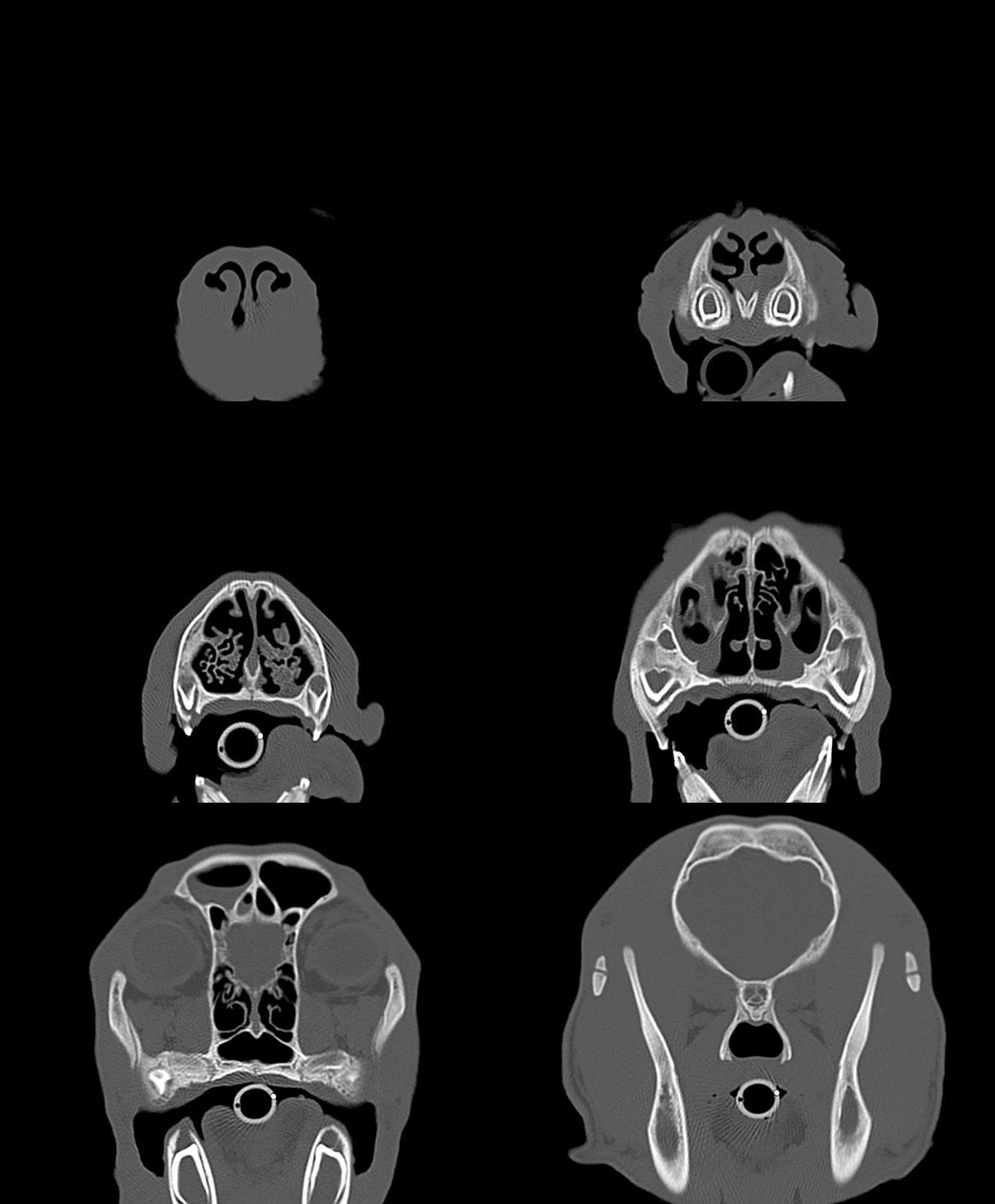
Large expansile, cystic lesions are visible in the right maxilla surrounding the crowns of the unerupted permanent 4th premolar (PM4), as well as of the 1st and 2nd molar (M1 and M2). The oral part of the cortex is partially disrupted at the level of M1 and M2. No connection to the nasal cavity is visible. Large expansile, cystic lesions are also surrounding the unerupted permanent mandibular incisor teeth.

After contrast medium administration moderate, heterogenous contrast uptake is visible within the cystic lesion in the right maxilla and in the incisor part of both mandibles.

A severe reduction in the number of nasal turbinates is present in both nasal cavities. The remaining turbinates appear plump. Material isodense to soft tissue is present between the remaining turbinates. The nasopharyngeal meatus is narrowed and contains a moderate amount of material isodens to soft tissue, which circumferentially occupies approximately 60% of its diameter.

Severe enlargement of the mandibular and the medial retropharyngeal lymph nodes is present bilaterally (left > right).

Radiographic diagnoses

  • Expansile, osteolytic bone lesions associated with the crowns of the unerupted permanent teeth (P4, M1 and M2 right maxilla, incisor teeth both mandibles)
  • Bilateral reduction in nasal turbinates
  • Soft tissue material between remaining nasal turbinates
  • Lympahdenomegaly mandibular and medial retropharyngeal lymphnodes

Discussion

The changes are suggestive of dentigerous cysts. As differential diagnosis odontogenic keratocysts should be considered. However, odontogenic kertocysts are rare in dogs. Differentiation of the various odontogenic cysts required histopathology examination of the wall of the cysts.

The changes in the nasal cavity are suggestive of a congenital hypoplasia of the nasal conchae with secondary bacterial infection. As a differential diagnosis to a simple conchael hypoplasia a ciliary dyskinesia with or with situs inversus (Kartagener Syndrom) should be considered. A chronic bacterial rhinitis with secondary destruction of the nasal conchae is less likely due to the young age of the dog.
Read More

Maltese dog Lizzy, 5 months

Cough

Images courtesy of Tierklinik Hofheim. Dres Kessler, Kosfeld, Tassani-Prell, Bessmann, Rupp, Delfs, Schmohl, von Klopmann

Diagnosis

Description

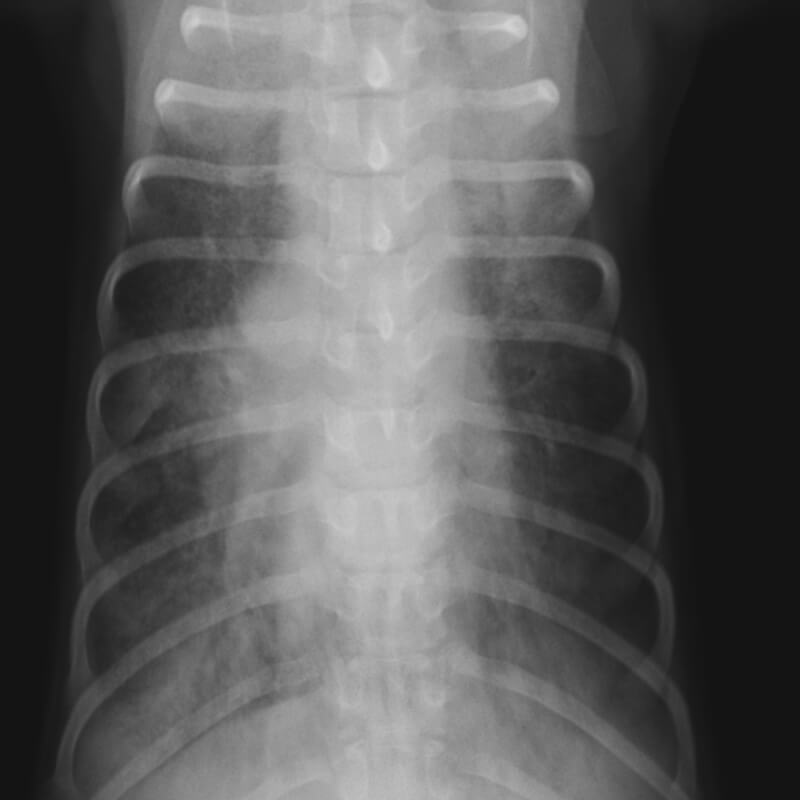
Thin animal with with a body condition score (BCS) of 3/9. Expiratory lateral and inspiratory ventro-dorsal radiographs. The diaphragm is not clearly visible due to silhouetting with the pulmonary changes. The liver is of homogenous soft tissue opacity.

The caudo-ventral liver margin extends beyond the costal arch, the caudal end is not included on the radiograph.

The lung parenchyma is increased in opacity. The periphery of the lung, especially close to the diaphragm, shows a patchy, confluent soft tissue opacity. The lung vessels cannot be identified in these areas and airbronchogramms are present. Centrally the lung is less severely affected. Thick and ill-defined doughnuts and tramlines are present. However, faint airbronchogramms are also evident.

The bronchus for the cranial lung lobe is wide and tapers late, suggestive of dyspnoea.

Ribs 1-8 are parallel with large intercostal spaces compatible with dyspnoea. The lung lobes extend to rib 12 on the lateral and rib 11 on the DV.

Radiographic diagnoses

  • Peripheral alveolar infiltrates with a central broncho-alveolar lung pattern
  • Ribs 1-8 are parallel with large intercostal spaces compatible with dyspnoea. The lung
    lobes extend to rib 12 on the lateral and rib 11 on the DV, also compatible with dyspnea

Discussion

The list of differential diagnoses for peripherally accentuated alveolar infiltrate is short and includes infection with Angiostrongylus vasorum and lung infarcts. Centrally, in the less severe affected areas, peribronchial infiltrate is present. The combination of peripheral alveolar and a central peribronchial infiltrate is highly suspicious for an infection with Angiostrongylus vasorum. Bronchial changes are not expected in a case of lung infarcts.

Outcome

Fine needle aspirate of the lung confirmed infection with lung worms. Lissy was dewormed and showed a full recovery.

Read More

Crossbreed dog Pack, 8 years

Heart murmour and coughing

Images courtesy of Tierklinik Hofheim. Dres Kessler, Kosfeld, Tassani-Prell, Bessmann, Rupp, Delfs, Schmohl, von Klopmann

Diagnosis

Description

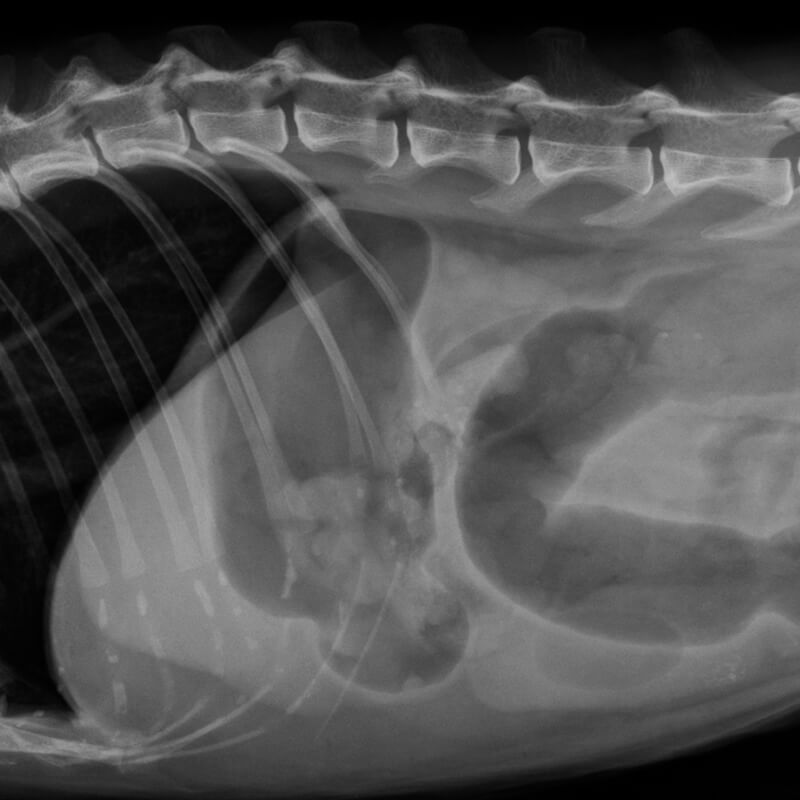
Normal body condition with a body condition score (BCS) of 4/9. Deeply inspiratory view; cranial diaphragmatic crus level with T13. Mild rotation of the lateral radiograph, left and right costo-chondral junctions not at the same level. Bony structures are normal. The diaphragm is intact. The liver is of homogenous soft tissue opacity.

The caudo-ventral liver margin extends beyond the costal arch (due to the deep inspiration) but is pointed.

The stomach contains food material and gas.

The trachea runs parallel to the spine. The carina is elevated. Mild splitting of the main stem bronchi on the lateral view.

On the dorsoventral (DV) radiograph the main stem bronchi are laterally displaced ; the left main stem bronchus and its continuation into the left lobar bronchus is not visible.
The caudal vena cava (CVC) runs from caudoventral to craniodorsal .

Severe enlargement of the cardiac silhouette is present.
On the lateral view the cardiac silhouette occupies 4,5 intercostal spaces with increased sternal contact; the cardiac silhouette occupies 95% of the thoracic height. The caudal border is straight and there is loss of the caudal waist. Severe tenting/enlargement of the left atrium is present.

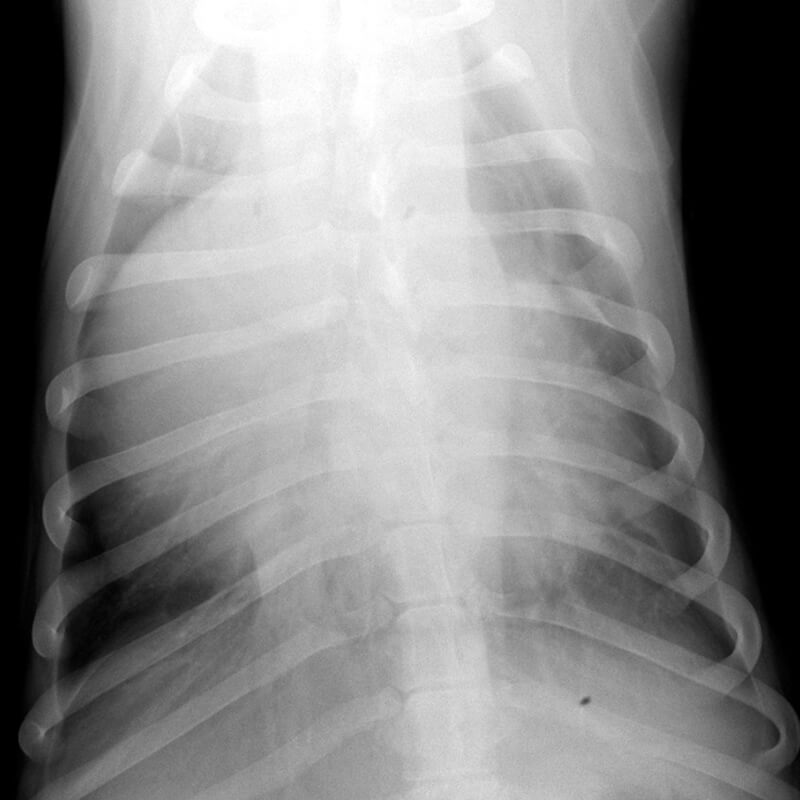
On the DV view the cardiac silhouette occupies 90% of the thoracic width. The cardiac silhouette appears almost round . A large bulge is present between 1 to 4 o’clock (point of maximum bulging is at 3 o’clock =region of the left auricle) followed by a slight flattening of the cardiac contour. The caudal aspect of the cardiac silhouette appears rounded. Caudal to the bifurcation the cardiac silhouette shows a centrally increased opacity, with a clear convex border superimposed onto the remaining cardiac silhouette.

The pulmonary vessels are difficult to see. On the lateral radiograph the pulmonary arteries and veins are larger than the proximal third of the third rib and are thus enlarged. On the DV view the caudal lobar vessels are larger than the 9th rib at the intersection of vessels and rib. The veins are slightly larger than the arteries.

The lung shows a generalized increased opacity, esp. in the caudodorsal lung field. Airbronchograms view are visible on the DV.

Radiographic diagnoses

  • Severe, generalized cardiomegaly with a more pronounced left sided enlargement
  • Dilated pulmonary vasculature with the veins slightly larger than the arteries
  • Alveolar lung infiltrate caudal lung lobes

Discussion

The course of the CVC and the elongated cardiac silhouette are due to an enlargement of the left ventricle. Loss of caudal waist, double opacity and bulge between 1-4 o’clock are compatible with an enlargement of left atrium and displacment of the left auricle. That there is only mild splitting of the main stem bronchi on the lateral radiograph is most likely due to the mild rotation of the radiograph obscuring the splitting. The lack of visibility of the left main stem bronchus and its continuation into the left lobar bronchus points toward a displacement and compression due to the enlarged left atrium.

The overall round appearance of the cardiac silhouette on the DV radiograph is most likely related to the deep chested conformation with an upright position of the heart. The round caudal aspect can in addition be due to the enlarged left atrium forming the visible caudal contour.
One common cause for enlargement of the left atrium and auricle in an aged dog is degenerative mitral valve disease. Enlargement of the left ventricle can occur secondary to volume overload, as the increased blood volume in the left atrium enters the ventricle during diastole. The impression of an additional right sided cardiomegaly can be artificial due to displacement of the right side of the heart by the severely enlarged left side or can be due to a concurrent tricuspid valve insufficience (degenerative or congenital (latter being less likely)).

The differential diagnosis is dilated cardiomyopathy which can lead to enlargement of all 4 chambers. However, there is flattening of the cardiac contour at the level of the left ventricle (straightening between 4-5 o’clock on the DV view). The enlargement of the left atrium is more severe than that of the left ventricle. Atrial enlargement occurs secondary to eccentric ventricular enlargement (dilatation) in DCM, thus a more severe enlargement of the left ventricle would be expected.

Another differential diagnosis includes congenital mitral valve dysplasia. The advanced age does not exclude a mild form of congenital disease and the changes could represent a late phase of the disease process. The enlargement of the right side of the cardiac silhouette may be due to similar reasons as discussed for degenerative mitral valve disease.

Dilatation of the pulmonary veins in combination with an alveolar lung pattern is compatible with cardiogenic pulmonary oedema due to left heart backward failure as a result of decompensation.

Outcome

Severe mitral valve insufficiency due to degenerative mitral valve disease with severe enlargement of the left atrium and left ventricle.

Mild tricuspid insufficiency without significant atrial or ventricular enlargement.

Read More

Maine Coon Lenny, 5 months

Possible erosive arthritis?

Images courtesy of Tierärztliche Klinik Ahlen. Dr. Gereon Viefhues

Diagnosis

Description

The main pathology is located in the epiphyses.

The proximal and distal epiphysis of both humeri, as well as the proximal epiphysis of both radii and femora are markedly deformed. The epiphyses are reduced in height and even partially absent (shoulder joints); they appear stippled with a heterogeneous opacity. The joint surfaces are markedly irregular incongruent. The underlying bone is sclerotic. Shoulder, elbow and stifle joints show a moderate to severe increase in soft tissue opacity.

Smooth, slightly heterogenous periostal new bone formation is present on the proximal humeral metaphyses resulting in a nose-like caudal protrusion. The underlying bone is sclerotic.

The glenoid cavity of both humeri is shallow. Smooth and solid new bone formation is present on the cranio-lateral aspect of the cranial and caudal acetabular edges.

The right femoral head is collapsed with a flattened cranial aspect. The left femoral head is flattened medially.

The distal epiphyses of both radii, ulnae, both tibial and fibular epiphyses as well as both tibial tuberosities are decreased in height but still result in a smooth articular surface.
The carpal and tarsal bones are of normal size but the bones show a coarse trabecular pattern.
The sacrum consists of only 2 vertebrae. The 3rd sacral vertebra is separate from the second. Otherwise the lumbar spine is unremarkable.

Radiographic diagnosis

  • Epiphyseal dysplasia in the appendicular skeleton with pathological fractures of some of the epiphyses. Associated secondary osteoarthritis

Discussion

Differential diagnoses for epiphyseal dysplasia include mucopolysaccharidosis, mucolipidosis, congenital chondrodysplasia, hypothyroidism and pituitary dwarfism.

In the current case mucopolysaccharidosis is considered the most likely differential diagnosis. Mucolipidosis is possible but very rare and usually lead to less severe epiphyseal changes. A congenital chondrodysplasia is less likely, as this usually leads to delayed of ossification of the small cuboid bone of the carpal and tarsal joint as well, which appear markedly reduced in size. In the case presented here the carpal and tarsal joints are not entirely normal, however the size of the cuboid bones is physiological.

Hypothyroidism is unlikely as changes usually also affect the epiphysis of the spine.
Pituitary dwarfism is unlikely due to the normal appearance of the physes. Pituitary dwarfism leads to delayed physeal closure, epiphyseal changes are also possible but do not represent the main finding.

Read More

Irish Setter Thor, 12 years

Epileptic seizures

Images courtesy of Tierklinik Hofheim. Dres Kessler, Kosfeld, Tassani-Prell, Bessmann, Rupp, Delfs, Schmohl, von Klopmann

Diagnosis

Description

The following sequences are available:

T2 weighted transverse, T2* weighted transverse, T1 weighted transverse pre and post contrast medium administration, FLAIR dorsal

A focal, approx. 0.5cm large, intraaxial lesion is present in the grey matter of the suprasylvian gyrus of the right temporal lobe. Centrally the lesion is hypointense on T1w, T2w and FLAIR images. Peripherally a thin, hypointense rim is visible. On the T2* weighted images a large signal void due to a susceptibility artefact is present.

There are no signs of a mass effect. No significant contrast medium uptake is present.

MRI diagnosis

  • Focal, intraaxial cortical lesion right suprasylvian gyrus with suceptibility artifact

Discussion

The suceptibility artefact is indicative for the presence of haemorrhage.

The most common cause for primary intraaxial bleeding is an amyloidangiopathy. Amyloidangiopathy represents perivascular accumulation of hemosiderin and generally appears as multiple very small, pin point changes. Another cause for primary intraaxial bleeding is a spontaneous rupture of vessels due to systemic hypertension, e.g in case of chronic renal disease.

Most common cause for secondary bleeding into the brain parenchyma is an infection with angiostrongylus vasorum. Further differential diagnoses for secondary bleeding include coagulopathies, such as occur with Cushing’s disease, trauma associated bleeding, tumour associated bleeding (vascular neoplasia, e.g. hemangioendothelioma, primary CNS neoplasia, metastases) or vascular malformations.

Haemorrhagic infarcts in dogs are rare, compared to humans.

Owing to the fact that in this case a single lesion with a relatively large susceptibility artefact is present, bleeding secondary to an infection with Angiostrongylus vasorum is considered the most likely diagnosis.

Furth differential diagnoses include systemic hypertension and coagulopathy. Vascular neoplasia and malformations are rare and therefore considered less likely but cannot be ruled out completely.

Due to the lack of contrast enhancement and the absence of peripheral oedema a brain metastasis is unlikely. Trauma associated bleeding can be excluded as no trauma was reported in the history and there are no changes in the overlying musculature which indicate previous trauma.

Outcome

Fecal examination proved a severe infection with Angiostrongylus vasorum.

The dog was dewormed.

Under therapy with anticonvulsant drugs seizuring was reduced and eventually ceased.

Read More

Domestic Shorthair Samson, 7 years

Weight loss

Images courtesy of Tierklinik Hofheim. Dres Kessler, Kosfeld, Tassani-Prell, Bessmann, Rupp, Delfs, Schmohl, von Klopmann

Diagnosis

Description

Thin body condition.

Collapse of the intervertebral disc space L7/S1 with sclerosis of the adjacent vertebral endplates and associated ventral spondylosis. Moderate ventral spondylosis is also present at L5 to L7. The last rib on the right side shows at its mid portion circular smooth and solid periostal new bone formation, the opacity is slightly reduced compared to the rib. The rib appears sclerotic centrally.

The diaphragm is intact. The visible part of the thorax is unremarkable.

The abdominal serosal detail is reduced centrally.

The liver is visible within the rib cage and is of homogenous soft tissue opacity. The stomach is moderately dilated and contains gas. Two populations of small intestinal loops are present. In the central abdomen a C-shaped, gas containing small intestinal loop is visible. It extends from caudo-dorsally from level L6 to L4, curves ventrally at L4 and terminates caudo-ventrally level with L5. It is approximately 3 times the height of the vertebral body of L5. At close inspection a second dilated intestinal loop is evident parallel to the ventral body wall and immediately caudal to the loop described above. It contains fluid and small gas bubbles. Caudal to the caudo-dorsal end of the gas containing dilated intestinal loop the gas containing descending colon is visible. The colon can be traced cranially, where it contains formed faecal material and is superimposed onto the described dilated intestinal loop. The remaining small intestinal loops are unremarkable containing small amounts of gas and fluid.

The dilated, gas filled intestinal loop is visible as a ring like structure in the central left abdomen. The spleen is visible along the left lateral abdominal wall. Kidneys and urinary bladder are unremarkable.

Radiographic diagnoses

  • Two populations of small intestinal loops are present, one of which shows a focal, severely dilated gas- and fluid content
  • Reduced abdominal serosal detail
  • Solid, smooth periostal reaction 13th rib right side
  • Collapsed intervertebral disc space L7/S1 with sclerosis of the end plates and ventral spondylosis

Discussion

The changes are compatible with a mechanical ileus.
This can be due to an intraluminal foreign body, mural changes, e.g. neoplasia, or extramural changes, e.g. stricture. Differentiation between the different aetiologies is not possible radiographically. The reduced abdominal serosal detail is most likely due to the reduced body condition. A perforation with peritonitis and a mild amount of ascites cannot be excluded though no free abdominal gas is evident.

Changes affecting the last rib are compatible with an old, healed rib fracture.

The collapsed intervertebral disc space L7/S1 with sclerosis of the end plates and ventral spondylosis is most likely related to chronic disc degeneration and herniation.

Outcome

In surgery an intestinal mass was found, which lead to the mechanical ileus. The mass was removed. On patho-histology the mass was confirmed as an intestinal adenocarcinoma. The cat recovered uneventfully and was discharged a couple of days later.

Read More

Maltese dog Jimmy, 9 years

For last 6 months coughing after drinking

Images courtesy of Dr. G. Viefhues Tierärztliche Klinik Ahlen

Diagnosis

Description

Barrel-chested thoracic confirmation. Normal body condition. Expiratory view with reduced thoracic volume on the lateral radiograph, good inspiratory ventrodorsal (VD) view. The 2nd sternebra is shorter with a flat caudal endplate. Mild step formation between 2nd and 3rd sternebae.

Spondylosis arising from the endplates of C6/7. Small amount of new bone formation at caudal aspect humeral heads.

The diaphragm is intact. The crurae are crossing T9 (expiratory view).

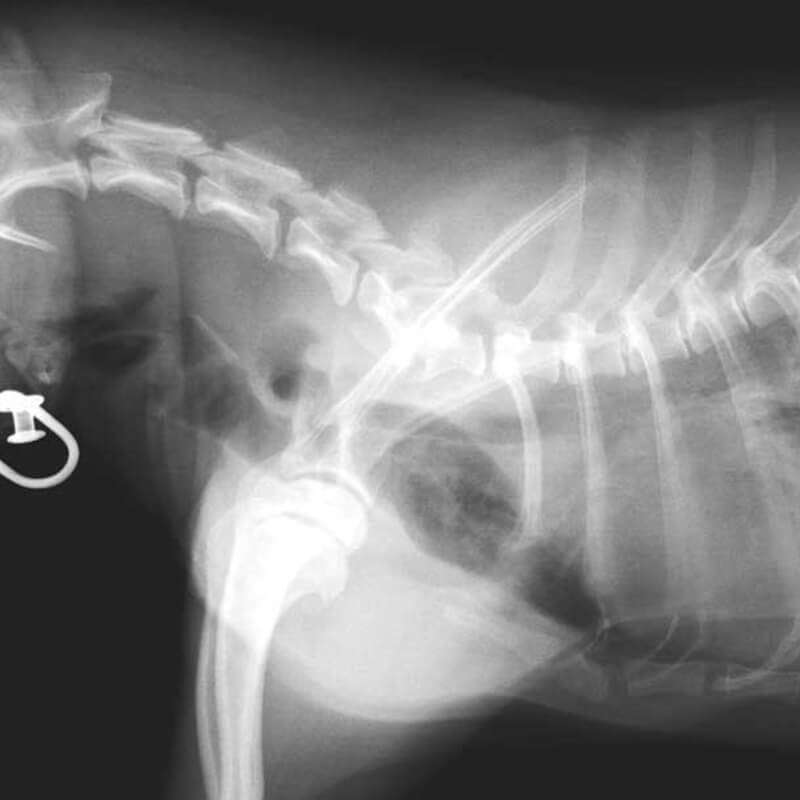
The liver is of homogenous soft tissue opacity. The stomach contains food material. On the lateral radiograph the neck is in a slightly flexed position. Larynogpharynx and larynx contain air. The cervical portion of the trachea is slightly narrower than the larynx, however overall it is wide. At the level of C6 the trachea shows an abrupt narrowing and runs dorsally resulting in an S-shaped kink.

Caudal to the kink the trachea has a reduced diameter, of approximately half the height of the larynx.
The intrathoracic portion of the trachea is barely visible and of soft tissue opacity.
At the level of the bifurcation the trachea as well as the main stem bronchi are not visible due to collapse.

At the level of C6, dorsal to the S-shaped tracheal kink, a crescent-shaped, clearly delineated gas accumulation is visible.

On the lateral radiograph the cardiac silhouette appears subjectively large, occupying 4 intercostal spaces and approximately 90% of the thoracic height. On the VD radiograph the cardiac silhouette is unremarkable. It occupies approximately 60% of the thoracic width.

No pathologic bulges are present on either view. The lung vessels are within normal limits. On the lateral radiograph the lung shows an overall increased opacity with a reticular pattern. Cranial to the cardiac silhouette a wing-like gas structure is visible extending from the cardiac silhouette into the caudal cervical area to C6. Centrally it contains slightly unsharp, fish bone like, soft tissue dens bands. On the VD radiograph the lung is within normal limits. The wing-like structure is not visible.

Radiographic diagnoses

  • Collapse intrathoracic portion of the trachea
  • Collapse of the main stem bronchi
  • Kinking caudal cervical trachea
  • Wing-like gas opaque structure cranial to the cardiac silhouette extending into the neck
  • Crescent shaped gas opaque structure dorsal to trachea
  • Interstitial lung pattern lateral radiograph
  • Spondylosis C6/7
  • Malformation 2nd sternebrae with step formation
  • Bilateral mild osteoarthritis shoulder joint

Discussion

The wing-like gas opaque structure cranial to the cardiac silhouette represent unilateral or bilaterally herniated cranial lung lobe(s). Lung lobe herniation is defined as the protrusion of lung parenchyma beyond the level of the thoracic boundaries. It is described to occur as a sequel to chronic respiratory distress and is strongly associated with collapse of the intra-thoracic trachea and major bronchi. Kinking of the extra-thoracic part of the trachea occurs in up to 1/3 of dogs.

The crescent shaped gas opaque structure dorsal to the trachea is most likely the gas filled oesophagus. Aerophagia could very well be explained by respiratory distress due to the tracheal and bronchial collapse. Most likely gas had been swallowed during acquisition of the radiograph.

The interstitial lung pattern is due to lack of lung aeration due to the expiratory nature of the lateral radiograph. The subjectively large cardiac silhouette on the lateral radiograph is due to the barrel-chested body confirmation and therefore the reduced thoracic height as well as the reduced thoracic volume due to expiration.

The malformation of the 2nd sternebrae is most likely due to an old trauma, differential diagnosis is a congenital malformation.

References

  • Dynamic Cervical Lung Hernia in a Dog with Chronic Airway Disease. Coleman et al. J. Vet. Int. Med. 2005
  • Cervical lung lobe herniation in dogs identified by fluoroscopy. Nafe et al. Can. Vet. J. 2013
  • Intermittend cranial lung herniation in two dogs. Guglielmini et al. Vet. Radiol. Ultraound 2007
Read More

Rottweiler, 19 months

Heart murmour, exercise intolerance

Images courtesy of Tierklinik Hofheim. Dres Kessler, Kosfeld, Tassani-Prell, Bessmann, Rupp, Delfs, Schmohl, von Klopmann

Diagnosis

Description

Expiratory radiographs.

The bony structures are within normal limits.

The diaphragmatic outline is not clearly visible ventrally as it is silhouetting with the cardiac silhouette. Steep orientation of the diaphragm.

The liver extends beyond the costal arch and the caudo-ventral liver margin is not clearly delineated.

The cardiac silhouette is enlarged. It occupies 4 intercostal spaces and 90% of the thoracic height on the lateral radiograph and there is buldging of the cranial contour of the cardiac silhouette. Increased sternal contact is present.

On the dorsoventral (DV) radiograph the cardiac silhouette appears mainly broadened. At the level of the 7th rib it occupies almost 100% of the thoracic width. The tip of the cardiac silhouette is displaced to the left side. There is prominent buldging of the cardiac silhouette between 7 and 11 o’clock. At the 7 o’clock the cardiac silhouette becomes slightly smaller; however, a convex bulging is still visible up to the level of the tip of the cardiac silhouette at 5 o’clock. The trachea runs parallel to the spine (lateral radiograph).

No splitting of the main stem bronchi is visible on the lateral view and no widening of the space between the two main stem bronchi is evident on the DV view.

The caudal vena cava (CVC) has an increased diameter and measures approximately 1.3times the height of the vertebral bodies.

The course of the CVC is normal, extending from a cranioventral in a caudodorsal direction.
The lung shows a mildly increased opacity with fine reticular pattern.

The vessel size is unremarkable.

A sail-like, soft tissue opaque structure is visible on the DV radiograph paralleling the left side of the cardiac contour.

Radiographic diagnoses

  • Severe, right sided cardiomegaly with bulging of the cardiac silhouette between 7–11 o’clock and to a lesser degree between 5–7 o’clock
  • Increased diameter of the CVC
  • Suspicion of hepatomegaly
  • Sail-like structure left hemithorax

Discussion

The buldging of the cardiac silhouette between 7-11 o’clock is compatible with an enlarged right atrium and right ventricle.

However, the severe dilation cannot be traced to the tip of the cardiac silhouette but instead terminates abruptly at 7 o’clock.

This makes it more likely that the bulge represents the severely enlarged right atrium. The bulge between 5-7 o’clock is compatible with an enlarged right ventricle which is less pronounced than the enlargement of the right atrium.

There are no signs for an enlarged main pulmonary artery.

The elevation of the trachea points towards an enlargement of the left side of the heart.
However, no splitting or bowing of the main stem bronchi is present and tenting of the LA is absent. Thus the left atrium is not enlarged.

Additionally, the caudal contour of cardiac silhouette is not straight or abnormally upright and there is no bulging between 12 -2 o’clock.

The normal course of the CVC speaks against a significant enlargement of the left ventricle, because this would lead to an elevation of the CVC.

On the DV view no bulging is visible along the left contour of the cardiac silhouette. Therefore, an enlargement of the left atrium and ventricle is unlikely.

The increased diameter of the CVC points towards the presence of a right-sided backward failure. Hepatomegaly would tie in with this finding and would be caused by hepatic congestion. Overall findings are compatible with an enlarged right atrium with right heart failure with hepatic congestion and enlargement of the CVC.

The young age of the dog makes a congenital disease most likely.

The sail like structure at the left side of the cardiac silhouette represents the thymic remnant, which is likely displaced by the enlarged heart and therefore better visible than expected in an 18 months old dog.

Differential diagnoses for right sided enlargement include:

  • Tricuspid valve dysplasia
  • Persistent artrio-ventriclar (AV) canal
  • Atrial septal defect
  • Cor triatrium dexter
  • Pulmonic stenosis

Tricuspide valve dysplasia is a possibility.
Due to the valvular insufficiency, regurgitant blood enters the right atrium during systole leading to atrial enlargement and possible right heart failure.

Persistent AV canal is possible, especially the complex form with a connection between all 4 chambers, which leads to an enlargement of right atrium and ventricle.

For a cor triatrium dexter the CVC is not big enough it cannot be eliminated from the list of differential diagnoses.

An atrial septal defect does usually not cause radiographic changes. Shunting of the blood usually occurs during diastole with blood entering the right ventricle, bypassing the right atrium. During systole the blood enters the lung. The resulting volume overload of the lung can lead to pulmonary hypertension with subsequent concentric hypertrophy of the R ventricular wall. A severe enlargement of the right atrium, as visible in this case, would be unlikely.

Pulmonic stenosis (PS) is unlikely due to the lack of an enlarged main pulmonary artery and normal sized lung vasculature (PS is associated with hypoperfusion).

Recommendations

Check the echogradiography for the final diagnosis.

Read More

Rottweiler, 19 months

Heart murmour, exercise intolerance

Which imaging plane is shown in the videos? What conclusion can be drawn from the doppler image? What’s your diagnosis?

Images courtesy of Tierklinik Hofheim. Dres Kessler, Kosfeld, Tassani-Prell, Bessmann, Rupp, Delfs, Schmohl, von Klopmann

Diagnosis

Echocardiographic report

Video 1

Right parasternal long-axis 4 chamber view
The right atrium is severely enlarged. Additionally a mild enlargement of the right ventricle is evident.

Video 2

Left parasternal caudal/ apical 4 chamber view

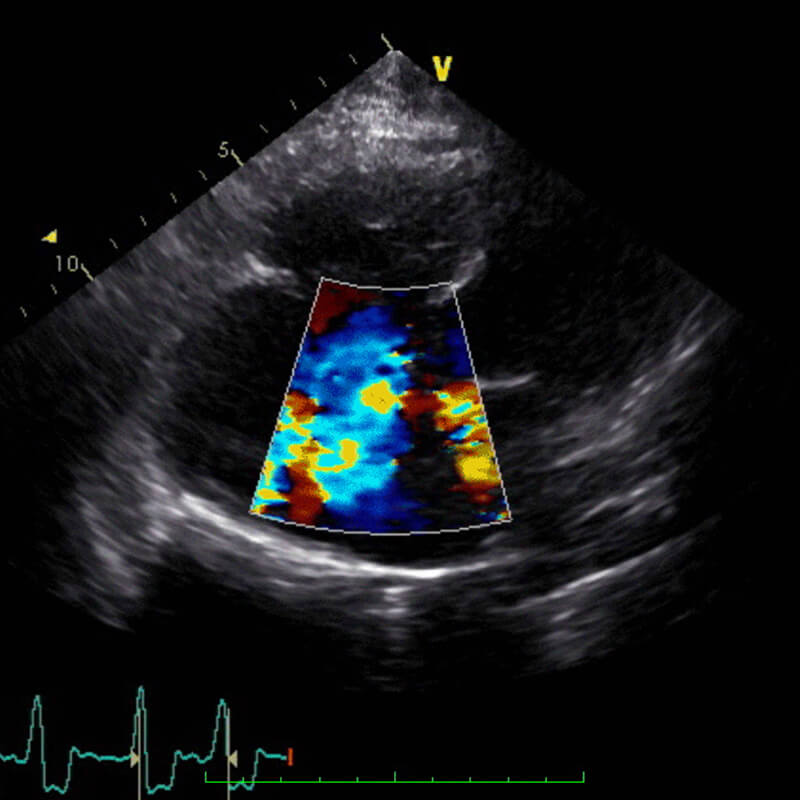
Doppler imaging of the blood flow through the tricuspid valve. The tricuspid valve is not closing completely. Severe regurgitation is present during systole.

Image

Same position of the probe as in video 2

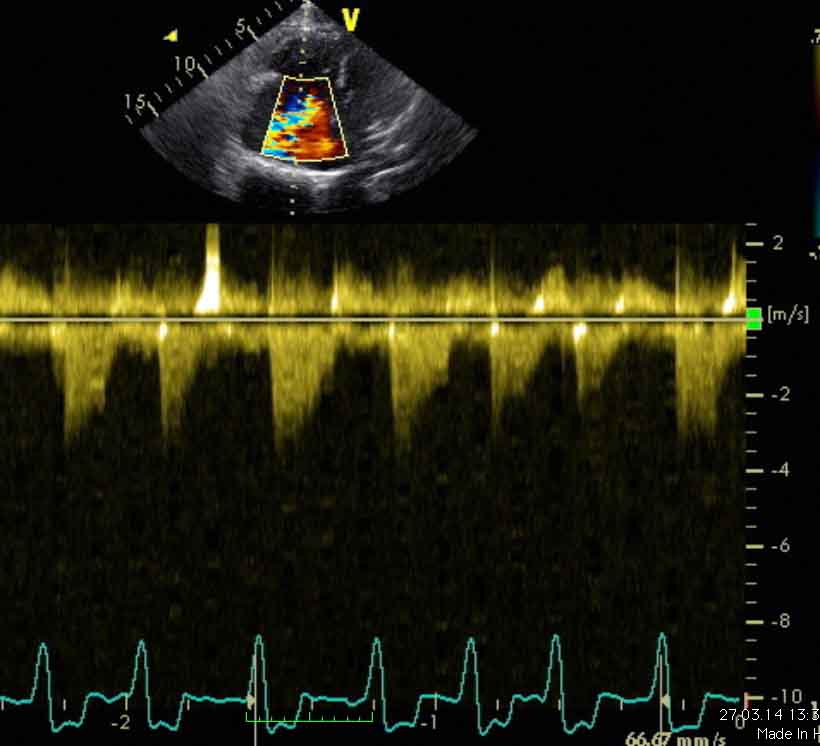
Continuous wave Doppler demonstrates the regurgitatant flow into the right atrium during systole. The image of the flow profile is suboptimal but the maximum velocity is approximately 4m/second.

The pressure in the main pulmonary artery (MPA) during systole can be calculated from the velocity of the regurgitant flow using the Bernoulli equation (p = 4 (V2)). With a maximum velocity of 4m/sec the pressure in the MPA is 64 mmHG.

The normal pressure in the MPA during systole is approx. 20 mmHg. The increased pressure in this case is indicative of pulmonary hypertension.

Additionally, the ECG shows an irregular rhythm and no visible P-waves. Thus, atrial fibrillations are present.

Echocardiographic diagnosis

Severe, decompensated tricuspid insufficiency due to tricuspid valve dysplasia.

X-rays can be found under the patient with the same name:

Read More

Irish Wolfhound Bailey, 1 year

Initially left sided, purulent nasal discharge, later bilateral nasal discharge

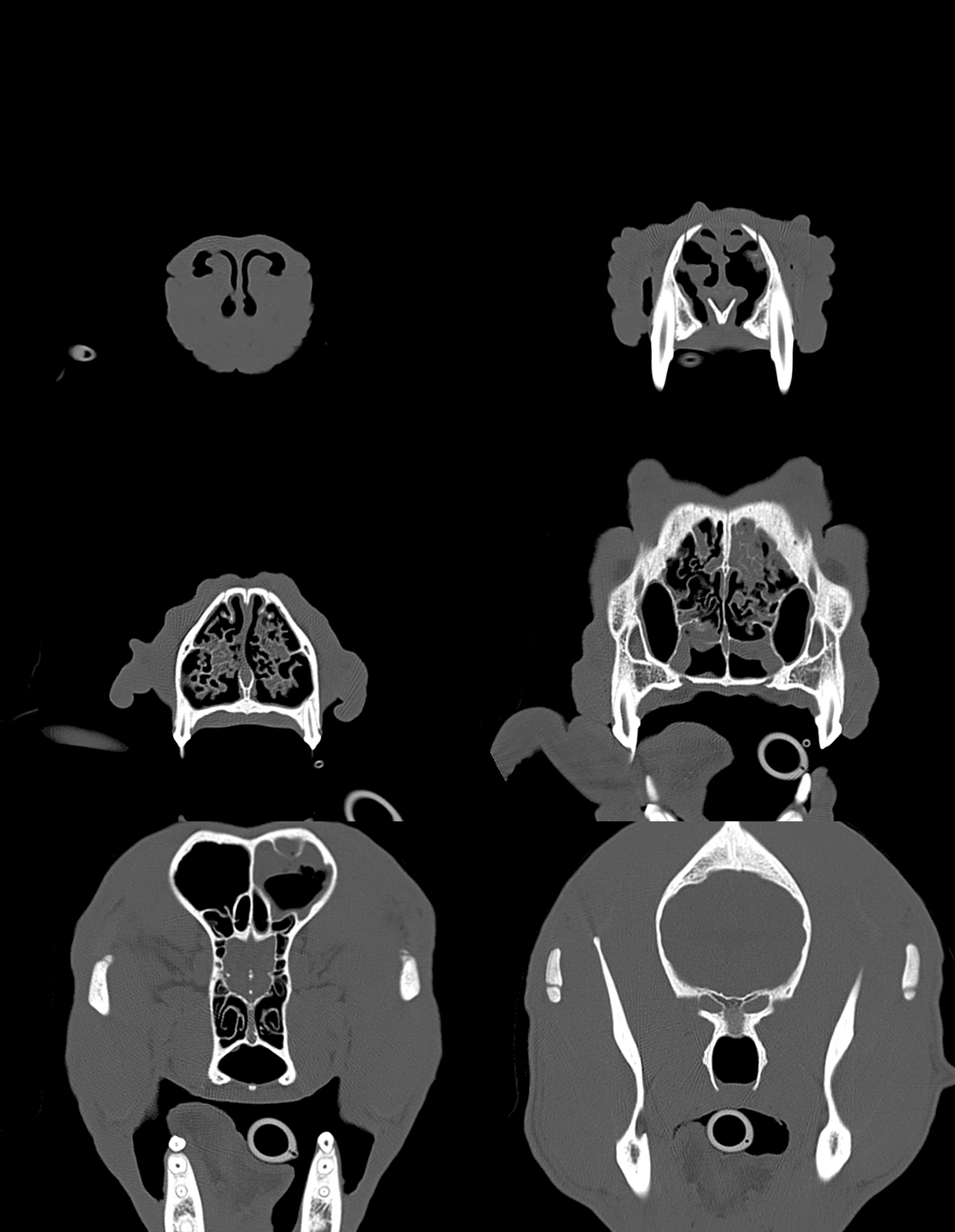
CT images from July 2014. At that time unilateral nasal discharge was present.

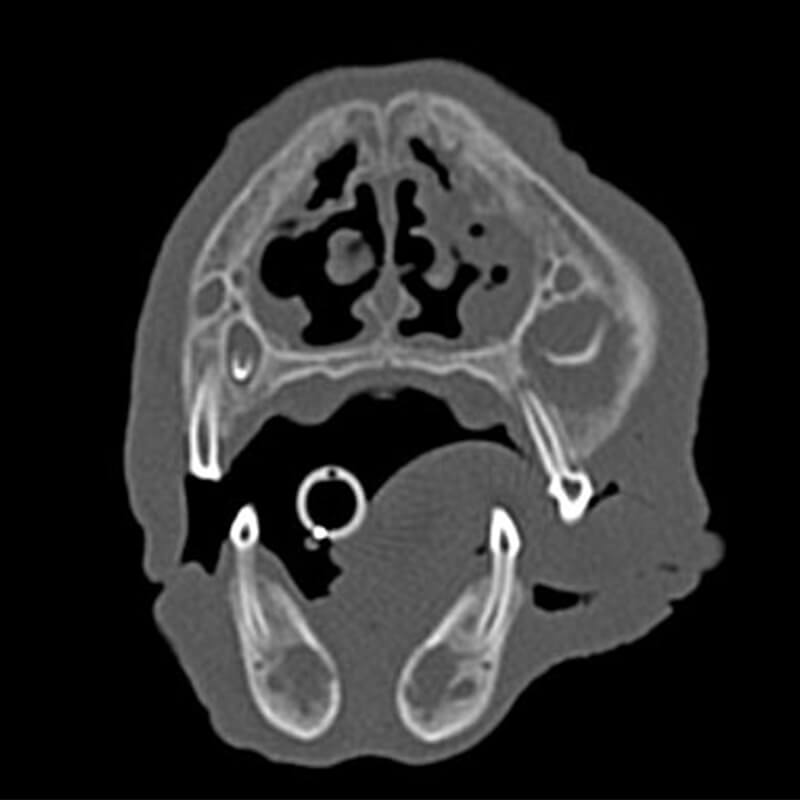
CT images from March 2015. This time bilateral nasal discharge was present.

Images courtesy of Kleintierklinik Greven. Dres. Böhmer, Cordes, Möller and Wienker

Diagnosis

Description

Severe reduction in size and number of the turbinates in both nasal cavities. Between the remaining turbinates a mild to moderate amount of soft tissue dense material is present. Within the left frontal sinus soft tissue dense material with a fluid level is present (images flipped horizontally, patient was placed in dorsal recumbency during image acquisition). The mucosal lining of the left frontal sinus is thickened. Findings are almost identical in both CT studies.

Radiographic diagnoses

  • Bilateral reduction in number and size of nasal turbinates
  • Soft tissue dense material between the turbinates
  • Sinusitis with fluid accumulation left frontal sinus

Discussion

Changes are compatible with rhinitis- bronchopneumonia syndrome of the Irish Wolfhound. The etiology is unclear. Immune mediated or primary ciliary defects are discussed. A hereditary background is assumed. Affected dogs show transient or persistent mucoid to mucopurulent nasal discharge of variable degree from birth . Concurrent bronchopneumonia can occur (most likely due to the ciliar dysfunction leading to an increased susceptibility for infection).

No progression of the changes is seen over the one year period. No granuloma is visible in the frontal sinus. The paranasal bones are unremarkable, showing no permeative osteolysis. Therefore a fungal rhinitis is less likely. In addition the dog is very young making a fungal rhinitis unlikely as well.

Recommendations

None.

Normal CT study nasal cavity

A reduction in the number of turbinates is not always related to a destructive rhinitis. Consider congenital hypoplasia predisposing the nasal cavity to infection, especially in young dogs.

Read More
WordPress Cookie Notice by Real Cookie Banner